
Commercial Soft Washing in DFW — Low-Pressure, High-Results
Property managers and facility directors with delicate exterior surfaces — EIFS, stucco, painted masonry, wood
What You Are Dealing With
Pressure washing damages delicate commercial surfaces. High-pressure water blasted at EIFS, stucco, painted masonry, or wood siding erodes material, voids waterproofing warranties, drives moisture behind the facade, and leaves visible damage that costs far more to repair than the cleaning cost to avoid it. Yet the organic growth — algae, mold, mildew, lichen — on these surfaces will not come off with water alone.
How BolAero Solves This
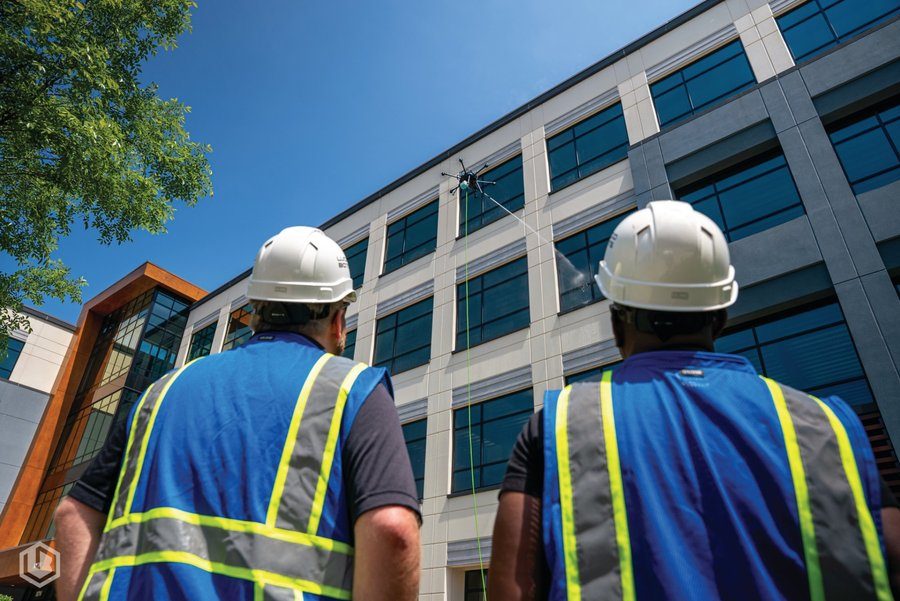
BolAero soft washing uses low-pressure chemical application from drone height to treat and dissolve organic growth without mechanical force. The cleaning solution does the work — not the pressure. Chemistry is selected for each surface type, applied evenly from ground level, dwells to break down contamination, then rinsed away. The result is a clean surface without the erosion, moisture intrusion, or warranty issues that high-pressure cleaning creates on delicate materials.
Speed
Chemical dwell time is factored into the schedule. Most commercial soft wash jobs complete in 1–2 days including application, dwell, and rinse. Traditional scaffolding-mounted soft wash on the same building typically takes 3–7 days.
What This Typically Costs
Commercial soft washing ranges from $2,000 to $10,000 depending on building size, surface type, and current organic growth severity. Soft wash requires more chemical product than pressure wash but eliminates the risk of surface damage that generates costly remediation and warranty claims.
Site Disruption Plan
Site Disruption Plan
Every BolAero job includes a written disruption plan before work begins. This is how we keep your property operating normally during cleaning.
Advance Notification
We provide tenant and resident notification templates before every job. Your management team stays ahead of questions.
Parking Management
Which areas are restricted, for how long, and what alternatives are available. Documented in writing before the crew arrives.
Pedestrian Routing
Active cleaning zones are marked. Pedestrian paths around work areas are identified during the pre-job survey.
Work Window Options
After-hours, weekend, and low-traffic period scheduling available. We work around your building operations, not the other way around.
Noise Expectations
Drone and pump noise levels communicated in advance. Significantly quieter than scaffolding assembly and gas-powered equipment.
Water & Environmental Compliance
Water & Environmental Compliance
Commercial exterior cleaning involves water and chemicals. We manage both responsibly and document our approach for your records.
Biodegradable Chemistry
All cleaning chemicals are biodegradable with Safety Data Sheets available on request. We select chemistry rated for each surface type.
Runoff Management
Water containment and diversion measures deployed on every job. Runoff is managed, not ignored.
Volume Estimates
Approximate water usage provided during the quote process so you can plan for utility impact and drainage.
City Stormwater Compliance
Our water management approach is designed to comply with local city stormwater regulations wherever we operate. Documentation provided.
Building Types for Commercial Soft Washing
EIFS and synthetic stucco buildings, painted masonry and brick, wood siding and wood-frame commercial structures, fiber cement cladding, older stucco construction, mixed-use buildings with delicate facade systems, hotels and hospitality properties.
Questions About Commercial Soft Washing
What is the difference between soft washing and pressure washing?
Soft washing uses low-pressure chemical application — the cleaning solution dissolves organic growth rather than blasting it off mechanically. Pressure washing uses high-pressure water to physically remove contamination. Soft washing is required for delicate surfaces like EIFS, stucco, and painted masonry where high pressure would cause damage.
What surfaces require soft washing instead of pressure washing?
EIFS, synthetic stucco, traditional stucco, painted brick, painted masonry, wood siding, fiber cement, older building cladding, and any surface with active waterproofing or sealant systems. High-pressure washing on these materials risks erosion, coating damage, and moisture intrusion.
What chemicals do you use for soft washing?
Chemistry is selected based on the surface type and contamination category. Algae, mold, and mildew treatments use biodegradable surfactants with growth inhibitors. Oxidation and staining treatments use surface-appropriate solvents. Safety Data Sheets are provided for every chemical used on your property.
Will soft washing damage my building waterproofing?
No. Low-pressure application protects waterproofing systems that high-pressure water would compromise. We select chemistry that is safe for sealed and coated surfaces. Documentation of chemistry and process is included in the proof-of-clean report for your warranty files.
How long do soft wash results last?
Soft wash results typically last 1–3 years depending on local climate, tree coverage, and building orientation. North-facing and shaded surfaces accumulate organic growth faster. We include a maintenance recommendation in every proof-of-clean report based on observed site conditions.
Can you match the treatment to specific contamination types?
Yes. Algae, mold, mildew, lichen, efflorescence, oxidation staining, and atmospheric grime each respond to different chemistry. We assess contamination type during the quote process and select accordingly — you get targeted treatment, not a generic wash.
Ready to See What Drone Cleaning Can Do?
Call us or submit a request. We respond the same business day.