
Commercial Drone Visual Inspections in DFW
Property managers, facility directors, engineers, and building owners needing exterior condition documentation
What You Are Dealing With
You cannot manage what you cannot see. Facade cracks, failed caulking, water intrusion points, spalling concrete, loose cladding panels, and roof membrane failures are invisible from the ground — and expensive to discover after they become emergencies. Traditional close-up inspection means rope access, cherry pickers, or scaffolding at $5,000–$15,000 just to get eyes on the problem.
How BolAero Solves This
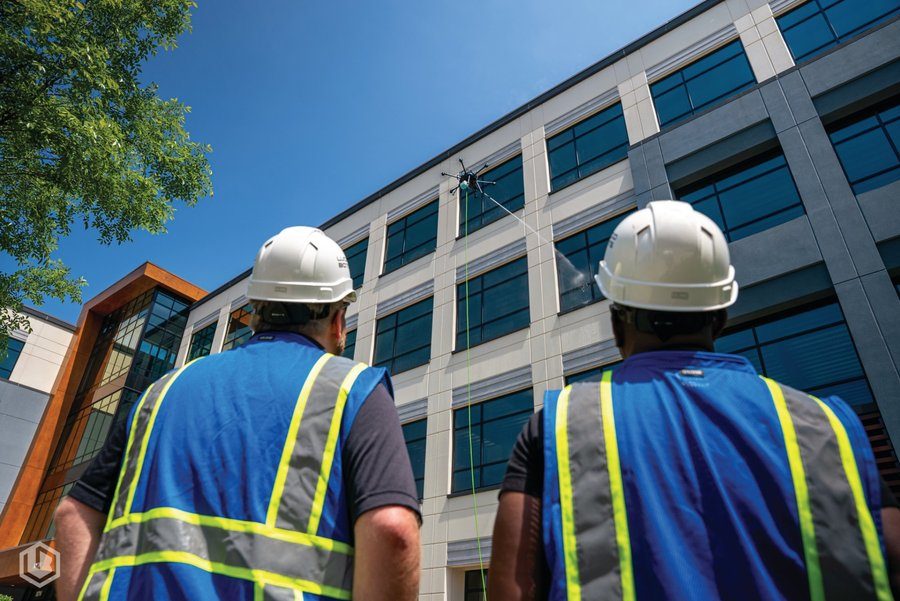
BolAero drone visual inspections put HD camera optics at every elevation of your building without any access equipment. The drone operator navigates the full facade at close range — close enough to identify cracked caulking, failed sealant joints, surface spalling, and membrane defects that would be invisible from the ground. Every finding is documented with timestamped, labeled photos organized by building side and elevation zone.
Speed
Full exterior inspection of most commercial buildings completes in a single half-day visit. Inspection report with labeled photos is delivered within 48 hours. No access equipment setup, no sidewalk permits, no building coordination beyond scheduling.
What This Typically Costs
Drone visual inspections range from $800 to $4,000 depending on building size and inspection scope. This compares to $5,000–$15,000 for scaffolding or rope-access inspection of the same building — making drone inspection a practical annual or bi-annual maintenance tool rather than a reactive emergency measure.
Site Disruption Plan
Site Disruption Plan
Every BolAero job includes a written disruption plan before work begins. This is how we keep your property operating normally during cleaning.
Advance Notification
We provide tenant and resident notification templates before every job. Your management team stays ahead of questions.
Parking Management
Which areas are restricted, for how long, and what alternatives are available. Documented in writing before the crew arrives.
Pedestrian Routing
Active cleaning zones are marked. Pedestrian paths around work areas are identified during the pre-job survey.
Work Window Options
After-hours, weekend, and low-traffic period scheduling available. We work around your building operations, not the other way around.
Noise Expectations
Drone and pump noise levels communicated in advance. Significantly quieter than scaffolding assembly and gas-powered equipment.
Water & Environmental Compliance
Water & Environmental Compliance
Commercial exterior cleaning involves water and chemicals. We manage both responsibly and document our approach for your records.
Biodegradable Chemistry
All cleaning chemicals are biodegradable with Safety Data Sheets available on request. We select chemistry rated for each surface type.
Runoff Management
Water containment and diversion measures deployed on every job. Runoff is managed, not ignored.
Volume Estimates
Approximate water usage provided during the quote process so you can plan for utility impact and drainage.
City Stormwater Compliance
Our water management approach is designed to comply with local city stormwater regulations wherever we operate. Documentation provided.
Building Types for Drone Visual Inspections
Office towers and mid-rise commercial buildings, apartment and condominium complexes, hotels, hospitals and healthcare facilities, warehouses and industrial buildings, rooftop equipment and membrane inspection, bridges and water towers, any structure where elevation access creates cost or safety concerns.
Questions About Drone Visual Inspections
What does a drone visual inspection include?
A close-range visual survey of the full building exterior — all four sides and roof perimeter — at drone proximity. The inspection covers facade condition, caulking and sealant joints, window and door perimeter seals, visible structural elements, drainage points, and roof membrane condition where visible. All findings are photographed, labeled by location, and compiled into a written report with maintenance recommendations.
How close does the drone get to the building?
Close enough to identify cracks in caulking, failed sealant joints, spalling concrete, and surface defects — typically 3–10 feet from the facade at each elevation. The pilot navigates systematically across each building face to ensure complete coverage.
What kind of report do you deliver?
A written inspection report with HD photos labeled by building side and elevation zone, a findings summary organized by severity, and a maintenance recommendation for each identified issue. Delivered as a branded PDF within 48 hours of the inspection visit.
Can drone inspections replace formal engineering assessments?
Drone visual inspections identify surface-visible conditions and document them for your records. They are not a substitute for engineering assessments that involve physical probing, material testing, or structural analysis. However, they are an efficient first-pass tool that can prioritize where engineering attention is needed — saving significant cost versus commissioning a full assessment of the entire facade.
Can inspections be combined with cleaning?
Yes. Many clients schedule an inspection before cleaning to document pre-clean condition, then a second pass after cleaning to confirm results and identify any surface issues that were obscured by contamination. Bundled inspection-and-cleaning packages are available at reduced combined cost.
How often should buildings be inspected?
Annual inspection is recommended for commercial buildings over 5 stories or older than 20 years. Bi-annual is standard for newer or lower-rise properties. Inspection frequency should increase after severe weather events, renovation work, or any incident that could affect the building envelope.
Ready to See What Drone Cleaning Can Do?
Call us or submit a request. We respond the same business day.